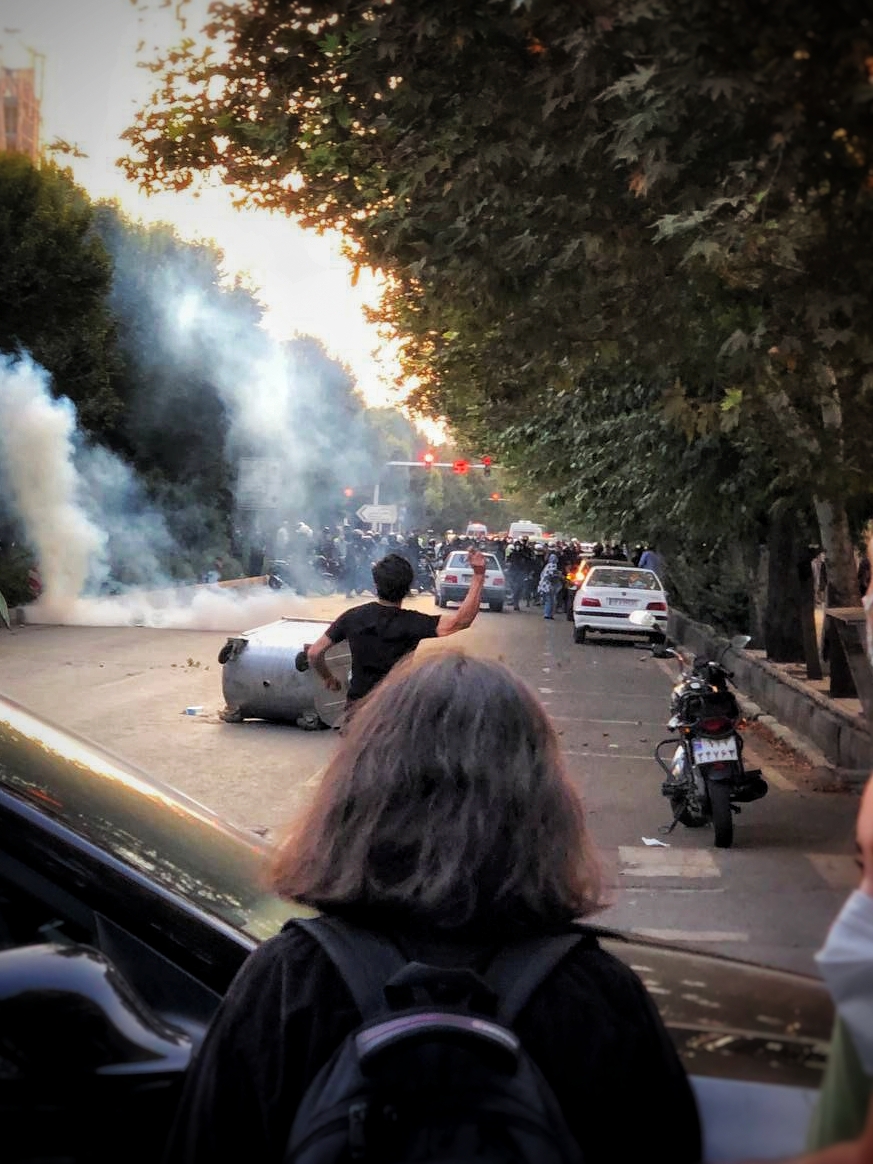
Iran is eroding, not falling
On Polymarket: Will the Iranian regime fall by June 30? ↗A regime executing people at its fastest pace since 1989 is not a regime on the verge of collapse — it is a regime fighting to survive, and succeeding.
Current view — April 14
There is a difference between a regime that is weakening and a regime that is falling, and the signal we are reading this week suggests almost everyone with money on YES has collapsed that distinction into one. The analytical voices that matter are not saying the Islamic Republic is on the verge of dissolution. They are saying it is under strain — sustained, serious, possibly historic strain — but that is a different claim entirely, and the June 30 deadline makes the distinction load-bearing.
Ibrahim Hamidi, one of the more careful observers of the Iranian political landscape, put it plainly: the regime did not fall, but it is being eroded. That framing matters. Erosion is a process that unfolds over years, not a binary event that resolves on a calendar date eleven weeks out. The energy markets desk at OilPrice.com was equally direct in assessing where the regime-change narrative currently stands, noting that those assumptions have simply failed to materialize.
The bulls on this market are not entirely wrong about the facts. We do not dispute that Iran's regional posture has been degraded, that its currency is under pressure, or that popular resentment runs deep. What they have not supplied is the connecting tissue: a credible mechanism by which those pressures converge into actual systemic collapse within the window. The most impassioned YES comment we read lists every vulnerability the Islamic Republic faces — exhaustively, emotionally — and then stops, having never explained how those liabilities produce a fall rather than a prolonged stagger.

We give significant weight to voices with direct experience. One Iranian citizen posting on this very market articulates forty-seven years of grievance with force and clarity, and their rage at the Islamic Republic is not in question. But even they do not claim the government is days from collapse — they describe a people with grievances, not a movement with a timeline. Raw popular anger and organized political transition are categorically different conditions.
Perhaps the sharpest framing comes from Michael Oren, who describes Iran's future as a genuine binary — regional persistence or deeper collapse — but makes the collapse scenario explicitly contingent on future pressure, naming a naval blockade as the kind of action that might prove decisive. That conditionality is telling: the lever has not been pulled yet.
Meanwhile, the regime's own behavior offers the least ambiguous data point available. Executions in 2025 reached their highest level since 1989, with at least 1,639 people put to death — a sixty-eight percent increase from the prior year. States do not execute their citizens at that pace because they have already lost control. They do it because they still retain enough of it to feel threatened by dissent. The bull case describes a regime at its weakest in decades, and that framing may be accurate. But weakest in decades is still a functioning apparatus of coercion — one that currently shows no sign of relinquishing the institutional levers that would need to slip simultaneously for a collapse to register before summer.
At least 1,639 executed in 2025, a 68% increase from 2024.
Rights groups warn the regime is using executions as a tool of repression after the January uprising.
48 women among the victims. pic.twitter.com/BcPYCcvqst