Hormuz closed the book on April WTI
On Polymarket: What will WTI Crude Oil (WTI) hit in April 2026? ↗With Brent already above $140 and the Strait of Hormuz actively disrupted, WTI hitting its April threshold is not a question — it is a settled fact the market is pricing at 99.9 cents.
Current view — April 14
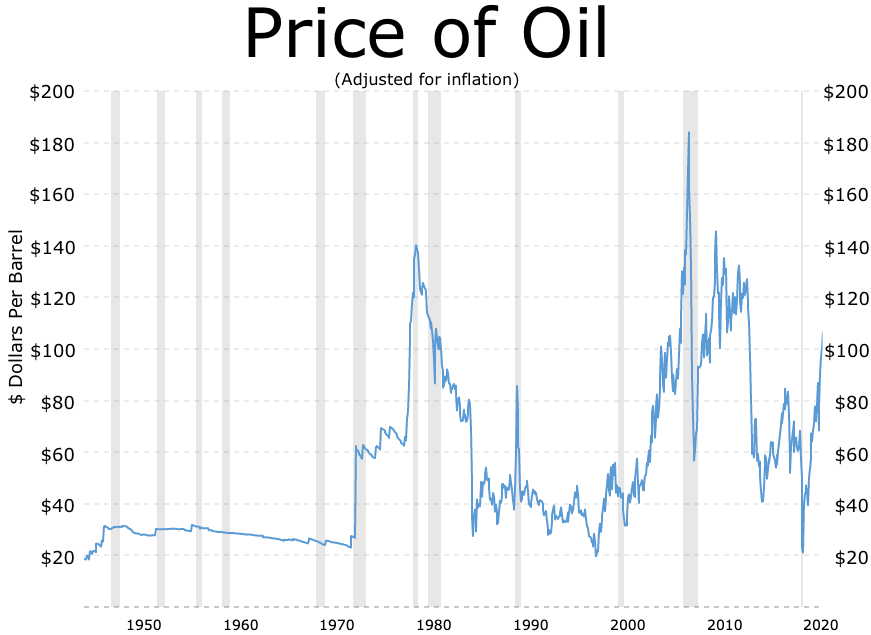
The physical oil market has already delivered its verdict. Brent crude trading above $140 per barrel is not a forecast or a stress scenario — it is the current state of the world, with a ceasefire between the US and Iran that market participants with real money on the line are characterizing as structurally fragile. WTI, which historically prices at a discount to the global benchmark, has followed Brent materially higher. The April threshold on this market was cleared by the underlying commodity, not by a prediction; the contract price of 0.999 YES is simply the ledger acknowledging that.

What makes this move durable rather than speculative is what the futures curve is telling us. WTI spot sits at $96.57, but the curve falls sharply to $73.86 further out — a textbook backwardation structure that signals the market is paying a premium specifically for oil available now. Backwardation of this magnitude doesn't emerge from sentiment; it emerges from physical tightness at the margin, from the Hormuz disruption, from Iraqi production running at a fraction of pre-war levels. The near-term supply picture is constrained in ways the spot price reflects and the back end of the curve implicitly acknowledges will eventually ease — but not within April.
WTI spot is $96.57, but the curve falls to $73.86 by G27.
That is a $22.71 drop.
Brent spot is $94.45, but the curve falls to $79.33 by G27.
That is a $15.12 drop.
This is classic backwardation.
near-term supply is tight… pic.twitter.com/r9iH5K9Eh6
The probability trajectory on this market is itself informative. When Polymarket and affiliated commentary were tracking the $120 and $130 levels, the numbers reflected genuine uncertainty about whether escalation would materialize quickly enough. That uncertainty has since collapsed entirely. The move to near-certainty is not retail capitulation or momentum chasing — it is participants updating on realized price action in a geopolitical situation that has moved in one direction and has not reversed.
Polymarket prices WTI above $120 in April at 72.5%. Above $130 at 45%. Above $140 at 28.5%.
Iran drone struck a Kuwaiti tanker off Dubai last week. Strait of Hormuz disrupted. Iraqi production at one-third of pre-war levels.
Kalshi…
We would be doing a disservice to the analysis if we didn't acknowledge the one moment that gave pause. When Trump posted that Iran had reached out for a peace deal, WTI reversed sharply, with technical levels in the $94–$97 range suddenly in play. For a brief window, it looked like verbal intervention could still work.
It didn't hold. One participant in this market observed that Trump's statements "no longer calm the markets as they once did," and that same session saw oil prices rise by more than 11% — the diplomatic tweet absorbed and overwhelmed within hours. The underlying bid is not ideological; it is structural. A US pilot is reportedly down in Iranian territory with search-and-rescue operations active, and the ground-operation scenario remains live. The read from a holder on this market is unambiguous: if boots reach the ground, the $120 level resolves essentially instantaneously.
What we are left with is a market where the YES has already been earned by events rather than expectations. The residual risk to a holder at 0.999 is a comprehensive diplomatic breakthrough materializing within the remaining days of April — theoretically possible, but not supported by anything in the forward curve, the physical market, or the behavior of participants with real capital committed to the outcome.