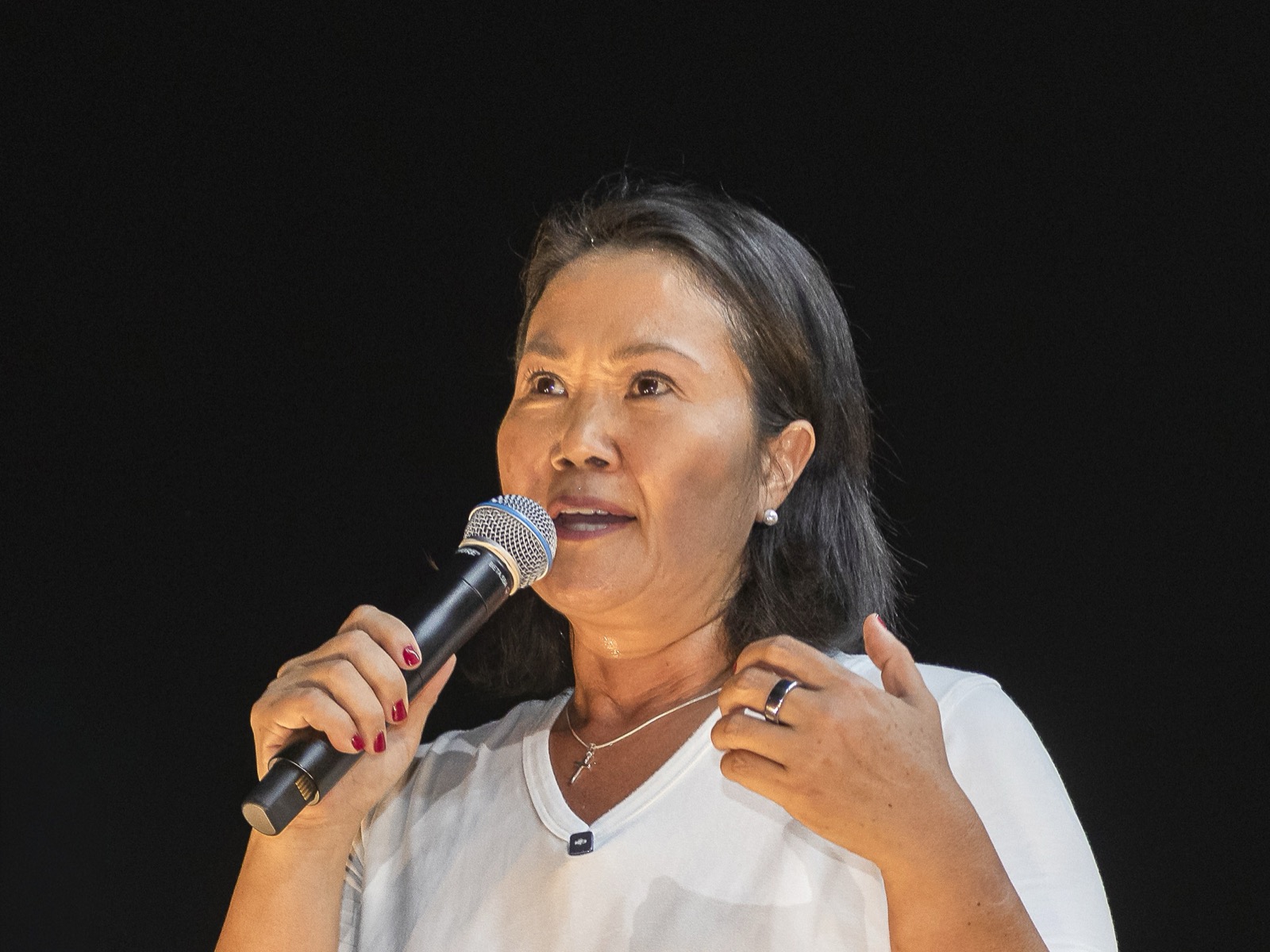
Keiko cleared round one. Markets haven't.
On Polymarket: Peru Presidential Election Winner ↗Keiko Fujimori locked up a comfortable first-place finish in round one, and at 26¢ the market is still pricing ghosts of 2016 rather than a three-way scramble for second that fractures the anti-fujimorismo coalition.
Current view — April 14
The vote is in, and the first question is settled. At 95.7% of ballots counted, Keiko Fujimori sits in comfortable first place. The single largest risk hanging over this market — that she might not reach the second round at all — has been retired by the actual results. The market's current price does not appear to have fully absorbed that fact.
The early count told a different story briefly. Official results at 20% counted showed Rafael López Aliaga leading Keiko 20.4% to 17.1%, which looked like it might confirm the bullish street commentary around RLA — his evangelical coalition, his packed campaign closings, the social-media energy his supporters described as representing "the real Peru" rather than Lima polling samples. That lead dissolved as the count matured. Keiko took and held the top position by the time nearly half the votes were in, and never relinquished it.
What makes the 95.7% snapshot genuinely interesting is not Keiko's position — it is what is happening immediately below her. A three-way statistical tie for second place between RLA, Roberto Sánchez, and Jorge Nieto means the shape of the second round is entirely unresolved. This matters enormously for how we read the current price. The conventional case against Keiko rests on the assumption that Peru's left and center will unify against her in a runoff, as they have before. That assumption holds cleanly if Sánchez advances. It becomes far messier if RLA — a hard-right Catholic conservative with a distinct political identity — is the one standing across from her, because the anti-fujimorismo bloc has no natural home on that side of the field.
Pre-election data had already told us to expect Keiko at the front. The Datum poll had her at 14.5% and the Ipsos simulacro at 18.1%, with everyone else in single digits. The RLA camp leaned on the theory that polls systematically missed their voter — the evangelical base in the provinces, not the urbanites answering morning surveys. The actual result tracked the polls faithfully, not the theory.
Keiko Fujimori 14.5
Carlos Álvarez 10.9
Rafael López Aliaga 9.9
Jorge Nieto 6.0
Ricardo Belmont 5.5
Roberto Sánchez 4.9
Alfonso López Chau 4.7
Marisol Pérez Tello 4.5
Simulacro Ipsos (votos válidos):
Keiko Fujimori 18.1
Carlos Álvarez 10.8
Rafael López Aliaga… pic.twitter.com/nVmZgVqc97
🟧Keiko — 12%
🟦Aliaga — 8% (-1)
🟨Alvarez — 8% (+1)
🟩Sanchez — 6% (+1)
🟥Nieto — 5%
🟥Chau — 4% (-1) pic.twitter.com/OVmrBzcH6b
RLA's supporters were not wrong that he had a real constituency. The argument that he carried a disciplined religious vote, ran 24 congressional candidates alongside him, and generated genuine energy at campaign closings was visible and credible.

What it amounted to in raw votes was a tie for second — not a first-place wave. That base is real and will not dissolve before a runoff. Whether it flows toward Keiko, consolidates behind RLA if he advances, or fragments across a divided right, is precisely the question this market will be pricing for the next several weeks. The current number does not appear to account for how differently those three scenarios resolve for her.