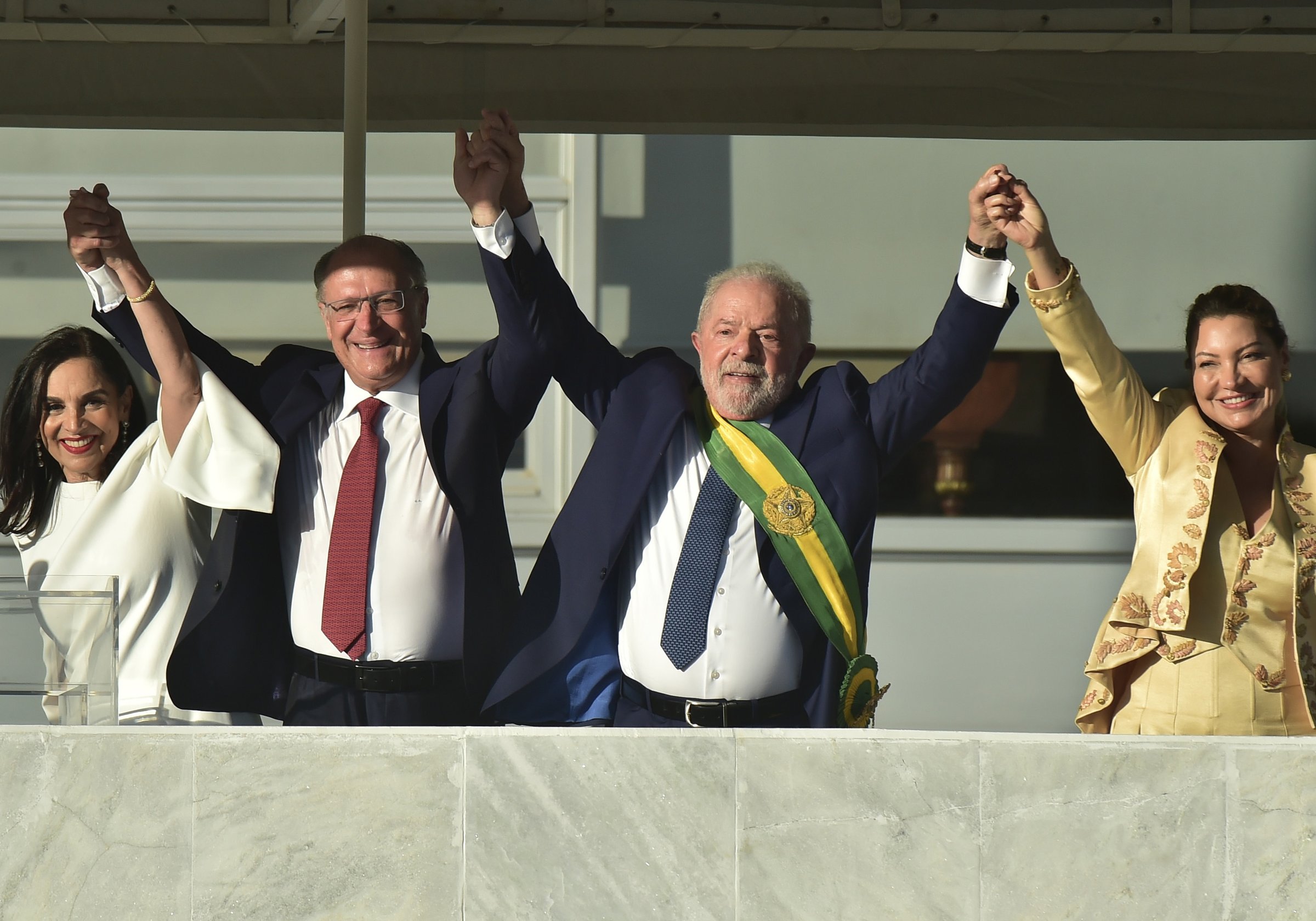
Brazil is Lula's race to lose
On Polymarket: Brazil Presidential Election ↗Lula's first-round polling at 66.7% valid votes makes the 40% YES price look like free money against a fractured, leaderless right.
Current view — April 14 · flipped from No
We were holding No on this market, and we no longer are. The signal that moved us was not a single dramatic development but a recalibration of which polling reality deserves to anchor the view: the SETA first-round number or the Verità runoff number. We had been anchoring to the runoff. We think that was the wrong frame.
The SETA survey from late March places Lula at 66.7% of valid first-round votes
📆 31 de março a 2 de abril
✅ VOTOS VÁLIDOS
🔴 Lula (PT): 66,7%
🟢 Flávio Bolsonaro (PL): 30,2%
🔵 Renan Santos (MBL): 1,9%
🟣 Ronaldo Caiado (UNIÃO): 0,6%
🟣 Aldo Rebelo (MDB): 0,3%
🔴 Romeu Zema (NOVO): 0,3%
✅ ESTIMULADA
🔴 Lula (PT): 56,7%… pic.twitter.com/TVk96enRRo
. The Brazilian electoral system requires 50% of valid votes to avoid a runoff — and 66.7% is not a whisker above that threshold, it is seventeen points above it. That number cannot be dismissed by pointing to October being months away. Polls this dominant in April for a two-round system generally describe one of two outcomes: either they compress significantly over the summer, or they describe a candidate who wins before a runoff is ever held. Prof. Marco Antonio Villa, who has tracked Brazilian elections for decades, signalled publicly that the current trajectory points toward exactly that kind of first-round resolution
.
The No thesis rested on runoff arithmetic. A Verità poll puts Flávio Bolsonaro at 44.9% against Lula's 41.5% in a hypothetical head-to-head
🔵 Flávio Bolsonaro — 44.9%
🔴 Lula da Silva — 41.5%
🟢 Ratinho Jr — 3.8%
🟡 Marçal — 2.1%
Encuesta Veritá pic.twitter.com/q6v7HK3Fs5
— a genuinely competitive number, and the single strongest piece of evidence against our current view. We are not dismissing it. But a runoff requires Flávio to first clear the first-round field, and that clearing process is visibly stalling. One of the more clear-eyed analysts in the Polymarket comment thread walks through the sequence carefully — Tarcísio stays in São Paulo, the right consolidates, a viable candidate reaches a runoff — and then pauses at the final step, writing openly that esta parte que tem mais incerteza
. That uncertainty existed when we held No. What has shifted is that it has grown, not shrunk.
What is growing it is structural. Renan Santos has formally institutionalised his candidacy with the founding of the Missão party, carrying 600,000 members across every state

. That is not a vanity exercise — it is a committed fracture in the anti-Lula coalition that will drain first-round votes away from whichever candidate the Bolsonarist lane produces. On the Bolsonarist side itself, betting-market commentary already notes that Flávio is "making water" — losing altitude — with Fernando Haddad rising to third among favourites
. Jair Bolsonaro's handwritten letter endorsing his son is a powerful image
, but it is also a ceiling: the voters who respond to that letter were already committed. It consolidates rather than expands.
The picture we now hold is one where the first-round number is plausible rather than aspirational, the runoff path for the opposition is narrowing rather than widening, and the probability currently implied by the YES price does not adequately account for either of those things.
Previous view — archived
We held No on the basis that Brazil's two-round system is a structural equaliser: a dominant first-round showing matters less than how a candidate performs when the choice is binary. The Verità polling showing Flávio Bolsonaro at 44.9% against Lula's 41.5%, alongside a separate survey describing the two as statistically tied, suggested the opposition retained a viable path through a consolidated runoff matchup. Combined with Jair Bolsonaro's explicit written endorsement of Flávio, we judged that the Bolsonarist inheritance was real enough to make the runoff genuinely competitive — and that a genuinely competitive runoff made the YES price more expensive than the underlying evidence warranted.
Our thinking over time
April 14 — Flipped to Yes
The flip crystallised around two things in combination. Re-examining the SETA first-round figure — Lula at 66.7% of valid votes
📆 31 de março a 2 de abril
✅ VOTOS VÁLIDOS
🔴 Lula (PT): 66,7%
🟢 Flávio Bolsonaro (PL): 30,2%
🔵 Renan Santos (MBL): 1,9%
🟣 Ronaldo Caiado (UNIÃO): 0,6%
🟣 Aldo Rebelo (MDB): 0,3%
🔴 Romeu Zema (NOVO): 0,3%
✅ ESTIMULADA
🔴 Lula (PT): 56,7%… pic.twitter.com/TVk96enRRo
— alongside Prof. Villa's explicit statement about a first-round electoral trajectory
forced a direct confrontation with the fact that we had been using runoff polling as a prior when the first-round data arguably makes the runoff scenario itself less probable. Second, Renan Santos' formalisation of the Missão party with 600,000 cross-state members
confirmed that the right-wing split is not pre-campaign noise but an institutionalised fracture — one that materially complicates Flávio's path to a clean one-on-one. The runoff bull case requires steps that are individually uncertain and collectively improbable.